
What’s less popular than Trump? Data centers.
In the latest Clarity Omnibus, we surveyed likely midterm voters on everything from data centers to Trump’s job approval, the economy, and more. We’re seeing trends that emerged earlier in the year continue and, in some cases, become even more established.
As always, our team is here to talk through the Omnibus results, as well as the insights from our media consumption models, including individual streaming models. We can help you pinpoint which voters are reachable via ad-supported streaming platforms, from media-consuming boomers to YouTube-watching zoomers. Request a personalized briefing here.
Here are some of our key takeaways from the May 2026 Omnibus:
What’s less popular than Trump? Data centers. While President Trump holds a net favorability of -16%, data centers are viewed even more poorly by the electorate at -24%.
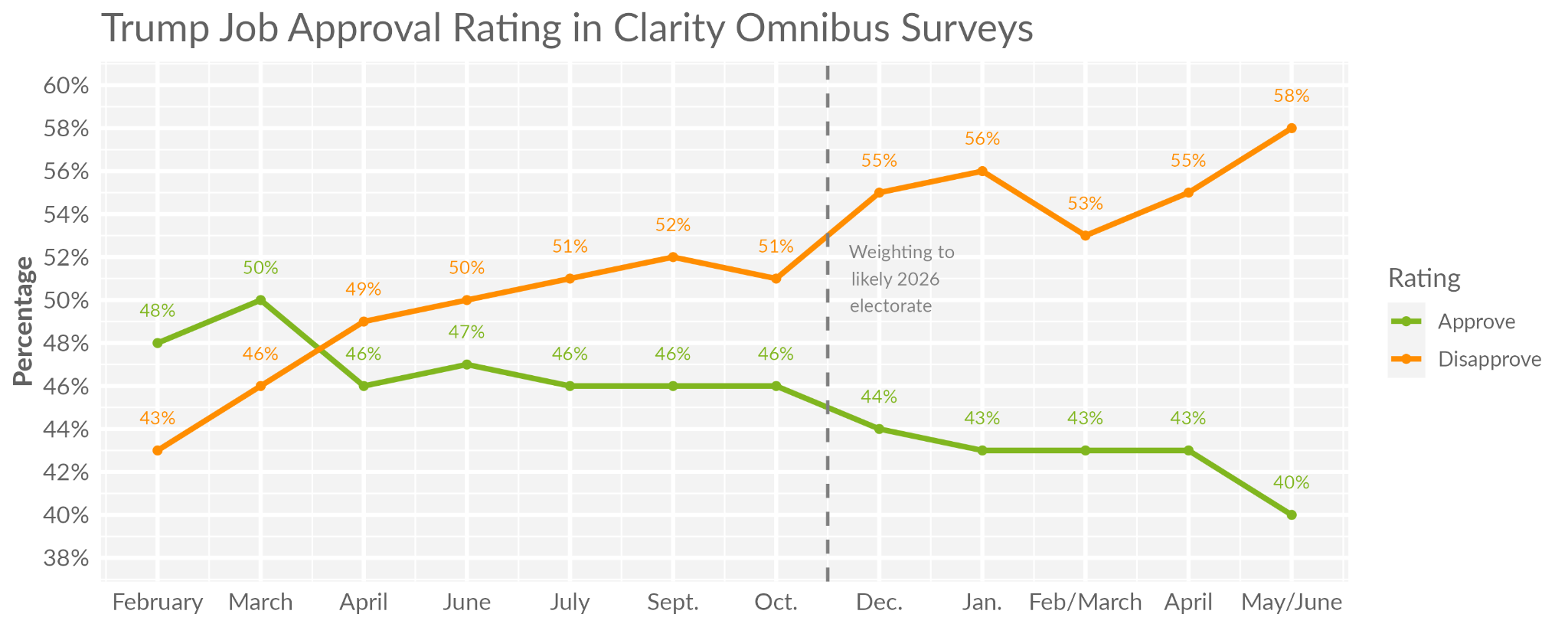
Trump’s worst month yet: After over a year of surveying likely voters on Trump’s job approval, this month marks the lowest rating yet, with 58% disapproving of the President’s performance.
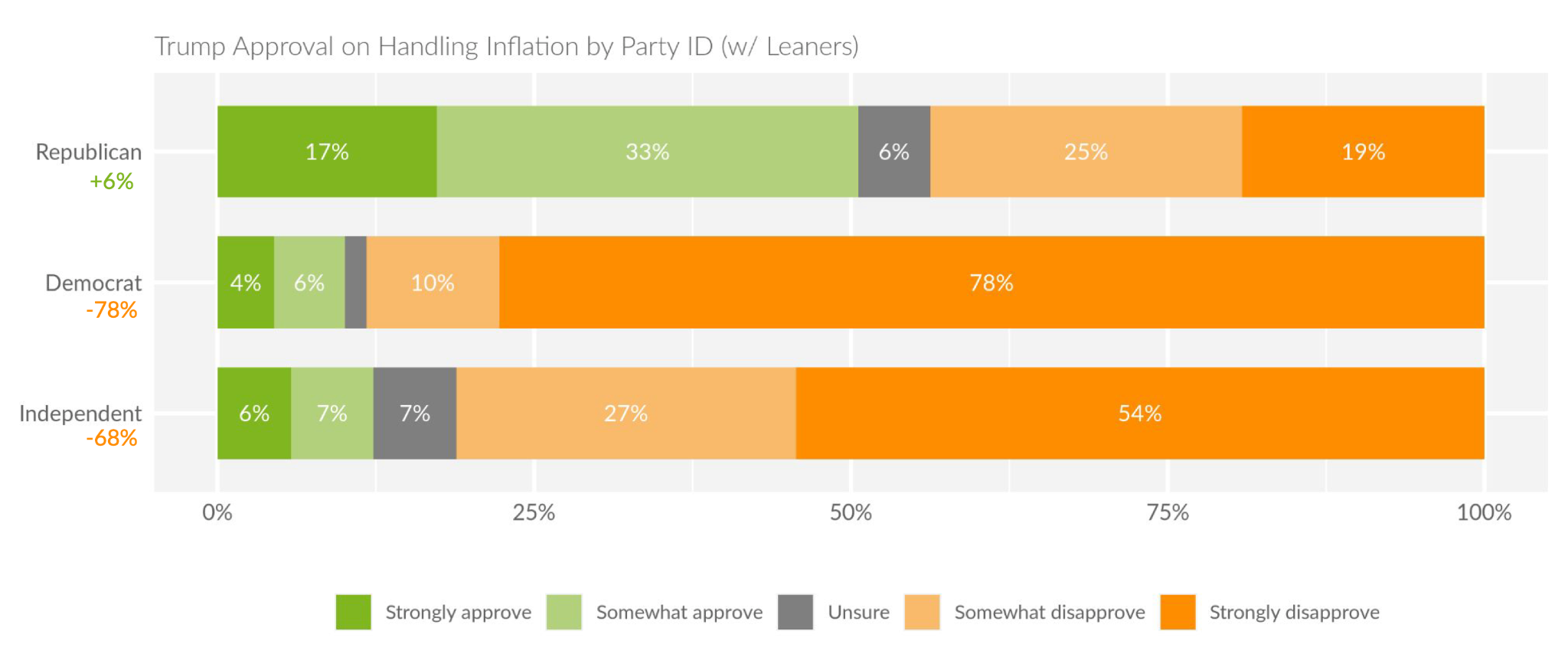
Is inflation affecting Republican morale? We saw a 14% drop in Republicans’ approval of Trump’s handling of inflation in just a month, with net approval going from 23% to 6% amongst Republican identifying voters since our April Omnibus.
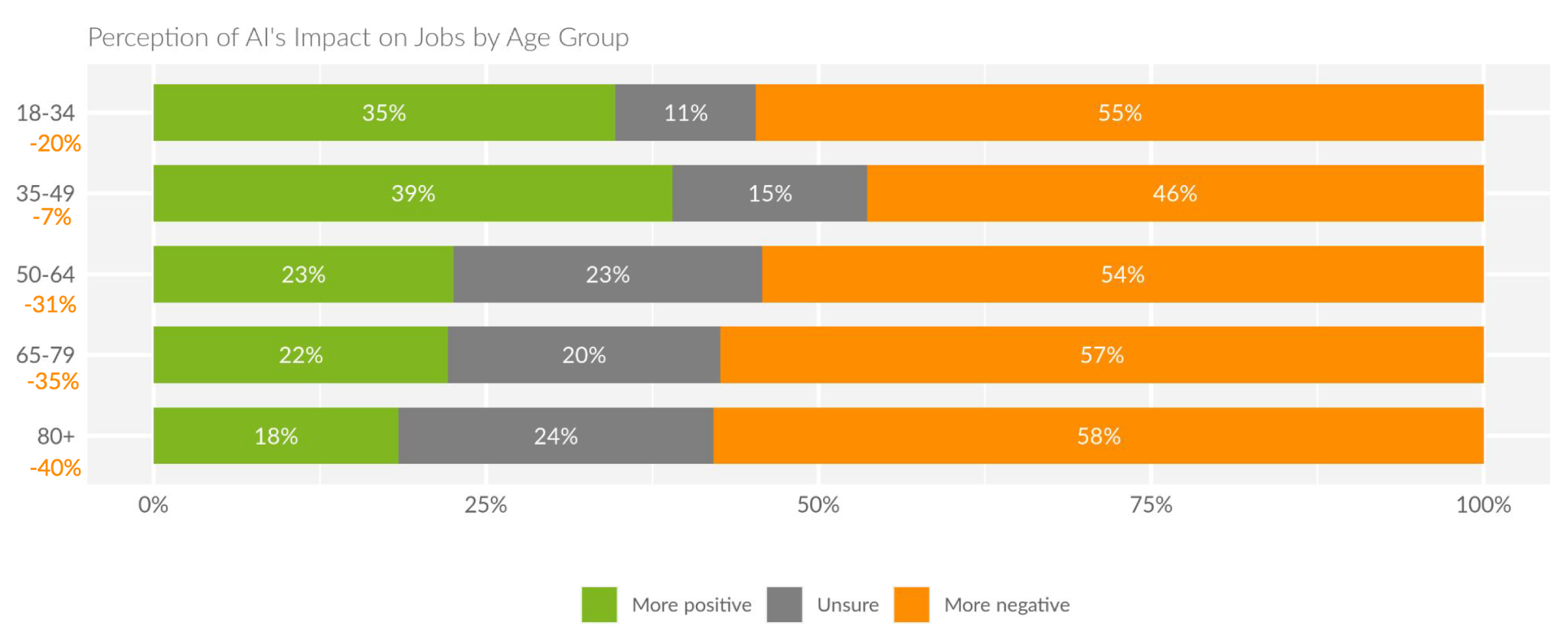
Where Boomers and Gen Z agree: AI is bad for jobs. Across nearly all age groups surveyed, over 50% of the electorate have a negative view of AI’s impact on jobs.
Data centers on the Downturn
Every Omnibus we survey voters' favorability on key topics in the current climate. As we’ve seen net favorability for President Trump drop, one topic is emerging as even more unpopular: data centers. Voters in this month’s survey have a net negative favorability of data centers at -24% the lowest amongst all the topics we asked.
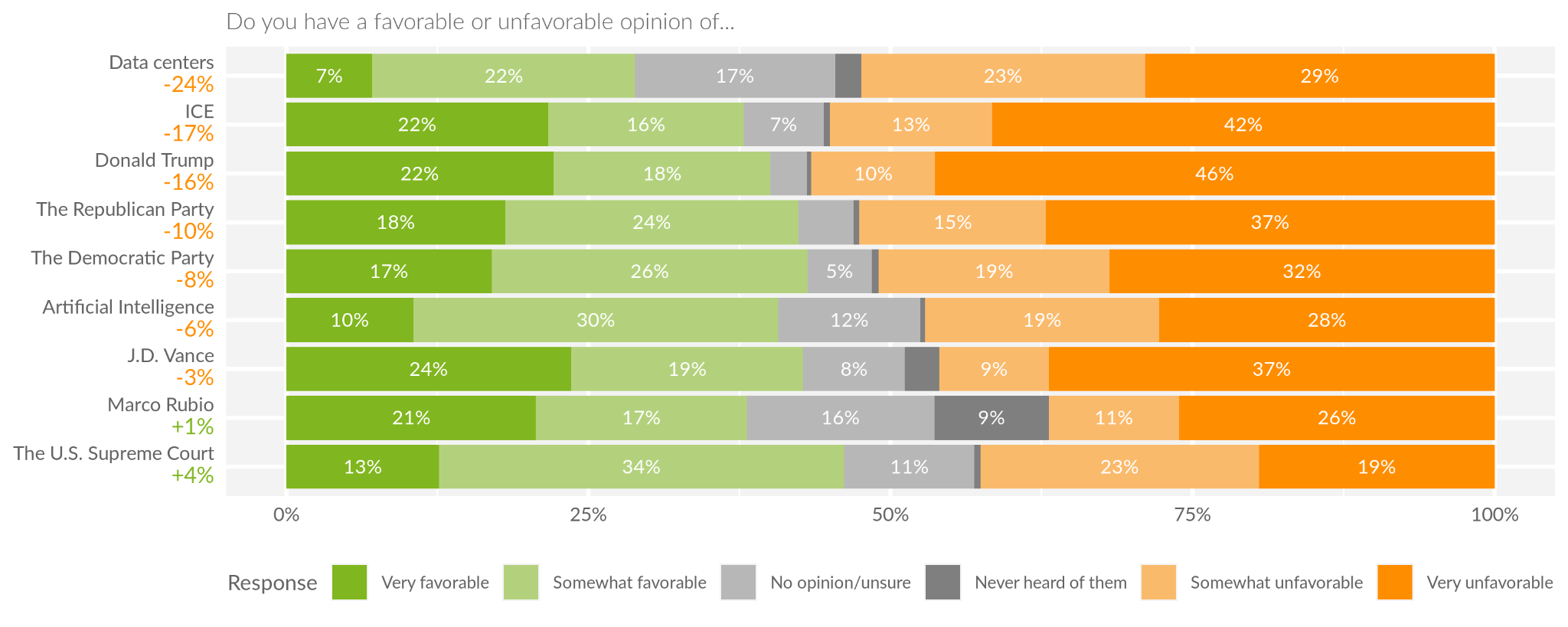
This crosses partisan lines, with both Democrat and Republican identifying voters holding a net negative view of data centers. When asked whether they would support or oppose the construction of data centers in their state, the responses were a net -25% among Democrats and -5% among Republicans.
Where do Gen-Z and Boomers Agree?
This negative view of Data centers extends to Artificial Intelligence (AI) mostly across generational and party lines, with the oldest and youngest voters having the most negative view of AI’s impact on jobs.
Despite AI usage being highest amongst young voters aged 18-34, their perceptions of its impact remain negative. Overall, only 28% of voters surveyed believe AI will increase productivity to make us better off.
Another demographic insight on views of AI: a stark gender gap with 40% of male voters believing AI would “make us better off,” compared with 22% of female voters.
Inflation woes affect even Republican outlooks
For the majority of our previous Omnibus surveys, when surveying voters on Trump’s handling of inflation, Republican voters have remained staunchly positive. However, this month’s Omnibus marks a dramatic downshift in perception, going from a net 23% approval in last month’s Omnibus to 6% currently. This is the largest decrease we’ve seen yet. We’ll continue to track this trend to see if it holds.
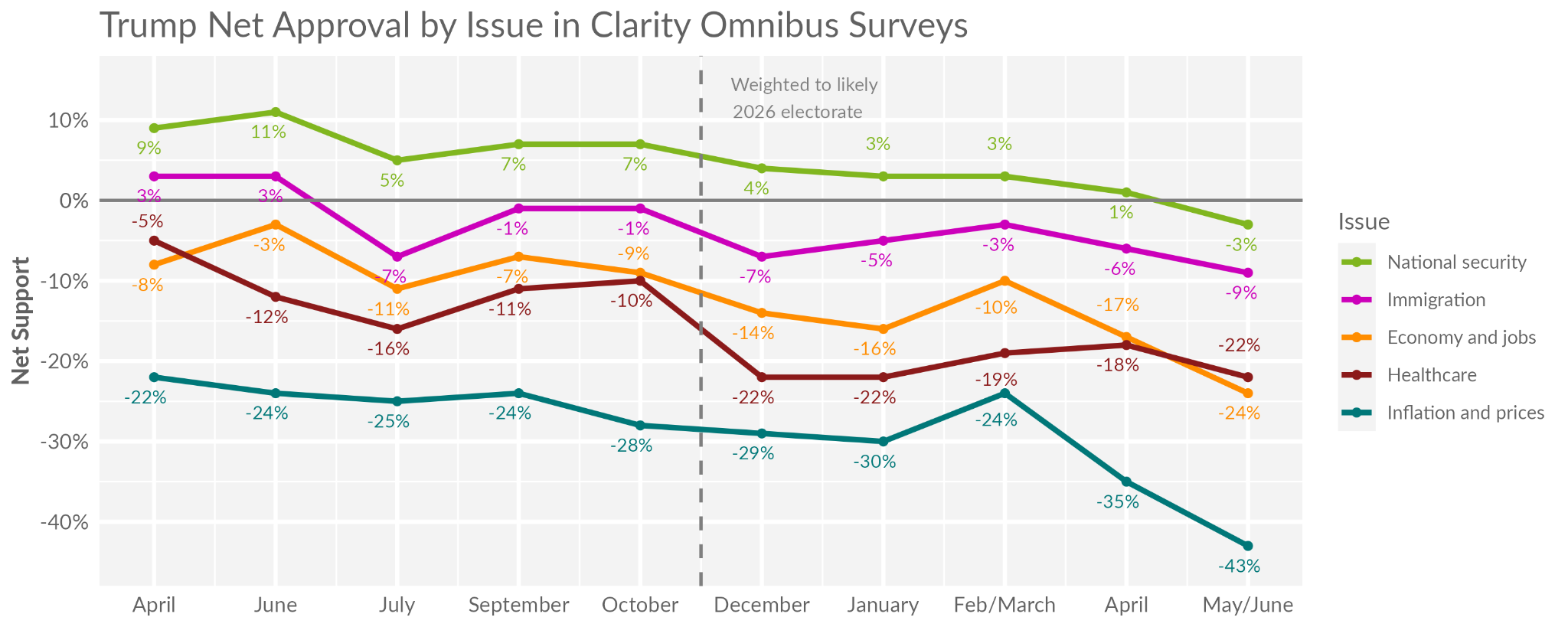
This month marks the lowest net approval ratings for Trump across most of the issue areas we track. Since our February survey, he has seen declines in his handling of healthcare, the economy, immigration, and national security. Inflation, however, stands out with the most significant drop, reaching a new low of -43%.
Is this Trump’s worst month yet?
We’ve been tracking voters' perceptions of Trump’s favorability and approval ratings since February 2025. For both, this month also marks the lowest numbers we’ve seen yet, with net favorability at -16% and approval at -18%.
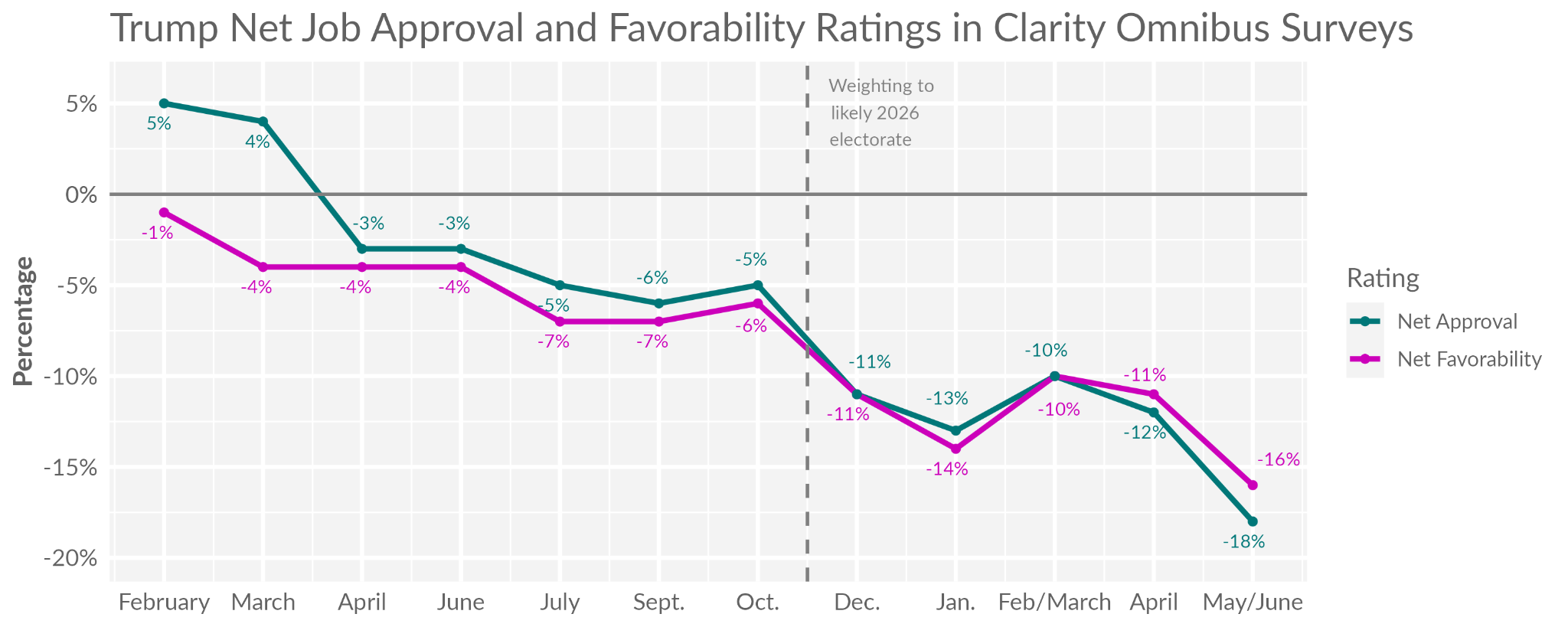
The gap between voters who approve of the President’s performance and those who disapprove has continued to widen, with 56% disapproval and 40% approval.
Where to reach today’s voters
Ready to reach voters directly? Clarity’s 2026 media consumption models dive into how different types of voters are reachable. Our media suite includes in-depth demographic data and individual models by ad-supported streaming service and a breakdown of voters by generational clusters.
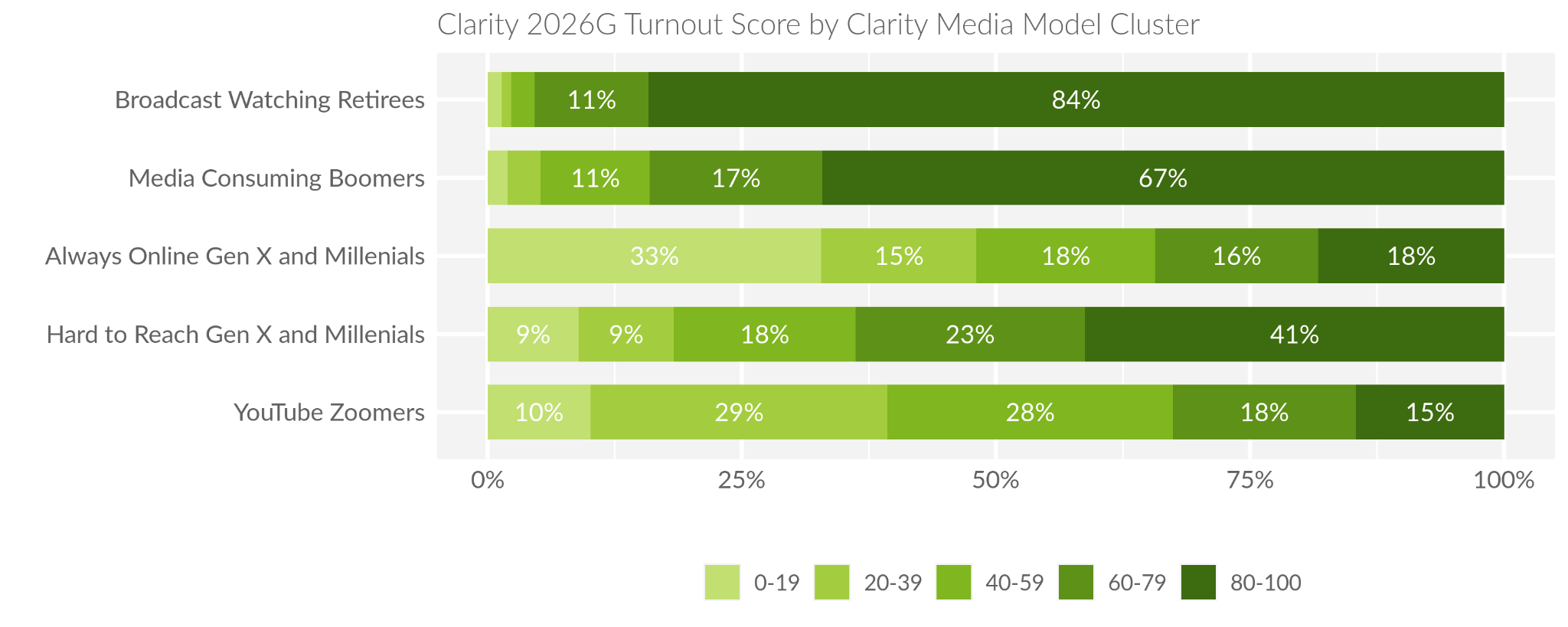
These groups can also be used in conjunction with other Clarity models, like the Clarity 2026G Turnout model. Among survey respondents, the media consumption clusters which skew older (Broadcast Watching Retirees and Media Consuming Boomers) have the highest share of very likely midterm voters. We also see the segment of Gen-X and Millennial voters who are harder to reach are also much more likely to vote than their ‘always online’ counterparts.
This national survey of 1,045 likely 2026 voters was fielded from May 28th-June 5th, 2026. You can dig deeper and share the public 2026 Omnibus report here. Detailed toplines and crosstabs are also available to subscribers on our Polling Portal.