
Midterm Voters Skeptical of War in Iran - Findings from the March Omnibus
In this month’s Clarity Omnibus, we surveyed likely midterm voters on their support for recent military action in Iran, concerns regarding the economy, and which party they trust to handle rising costs.
The Omnibus survey fields monthly, tracking opinions in a volatile environment, measuring things like support for the Trump administration’s latest actions and media consumption habits. As we launch into the midterms, our Omnibus is now weighted to mirror a likely midterm electorate, sampled from a universe of 2026 likely voters using the new Clarity 2026g Turnout score. Additional space on the survey is reserved for clients to ask their own questions. Get in touch here if you're interested.
Voters Weary of War in Iran
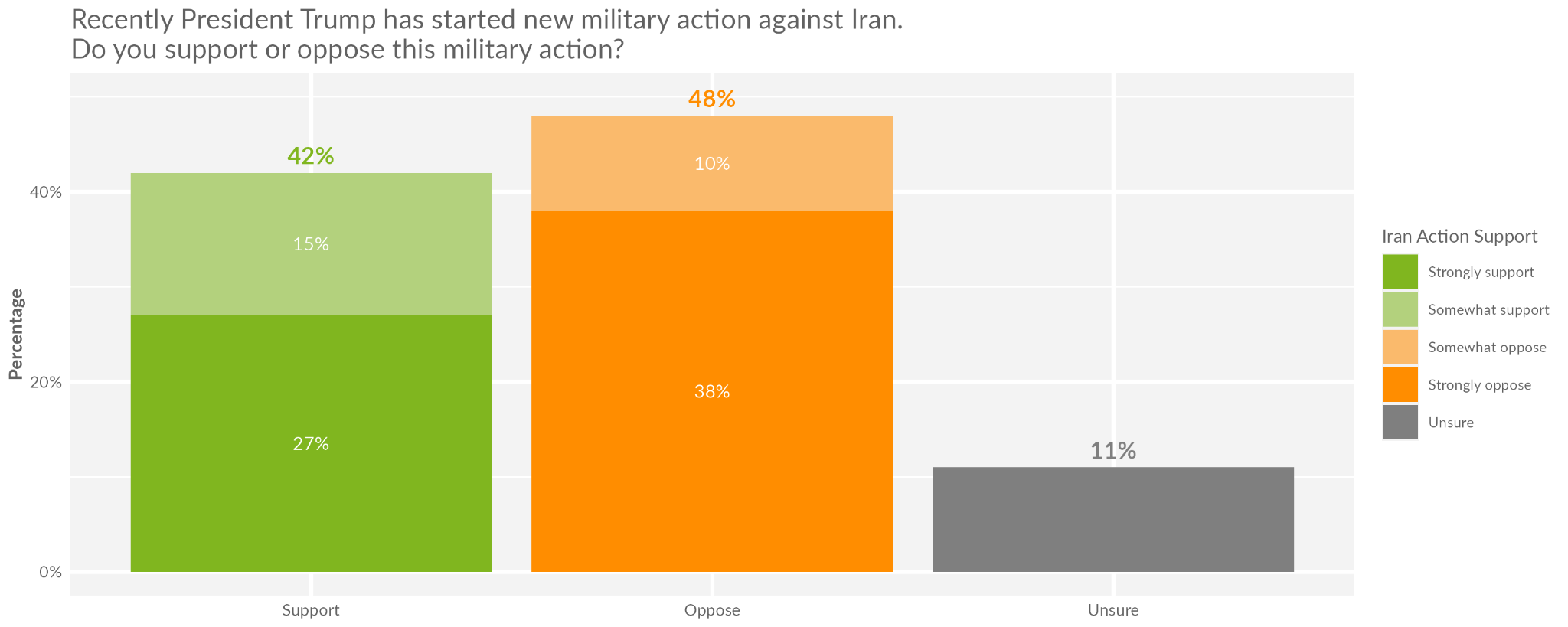
In this month’s Omnibus survey, we asked voters about their support for President Trump’s newest military engagement in Iran. Voters view US involvement in Iran negatively, with 48% opposing the military action and 42% supporting it. Nearly as many voters strongly oppose this military action (38%) as support it overall (42%).
Breaking out this question by party identification, we see that support for military action in Iran is concentrated primarily among Republican voters. While self-identified Republicans overwhelmingly support the President’s new war (+54%), Democrats and Independents oppose it, by a margin of -76% and -18%, respectively.
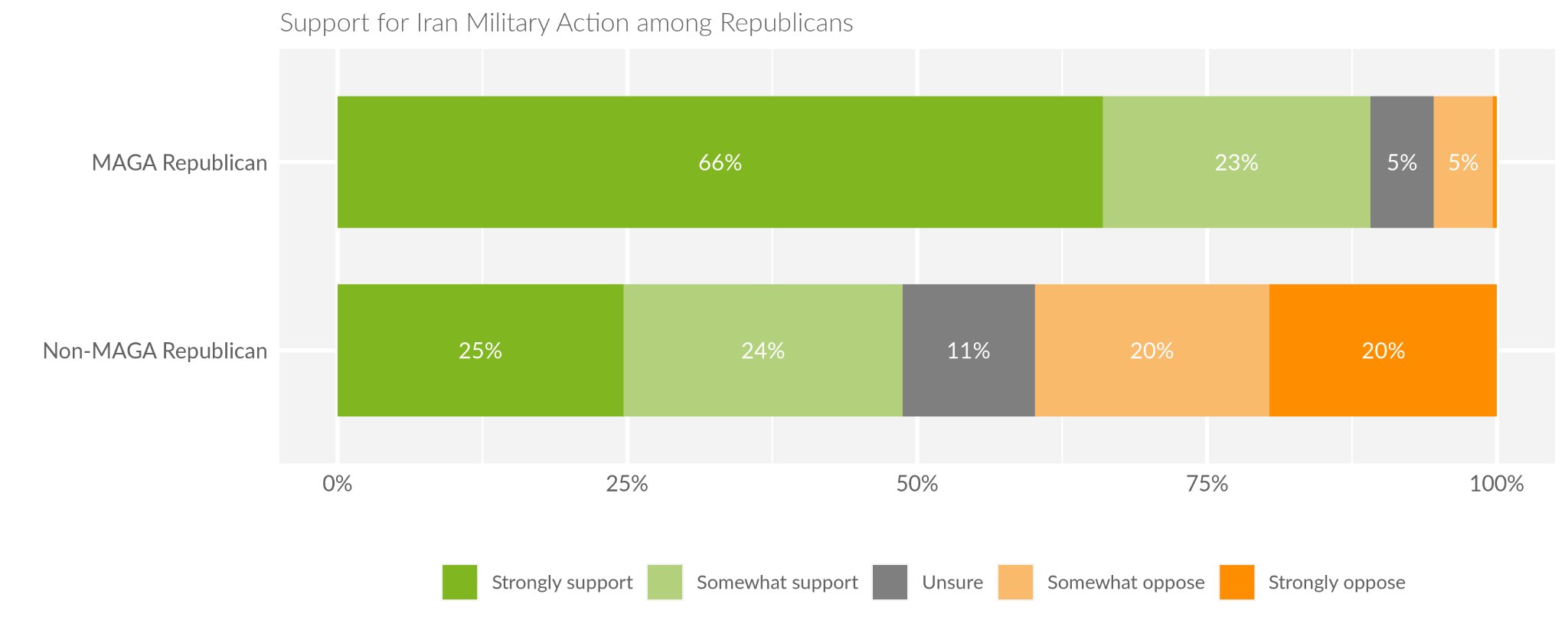
Of note, support for war is primarily driven by the most hardline Trump supporters. Republican voters who self-identify as supporters of the MAGA movement favor military action in Iran by a large margin (+88%), whereas non-MAGA Republicans offer much more modest support (+9%).
Frustration over Prices and the Economy Continues
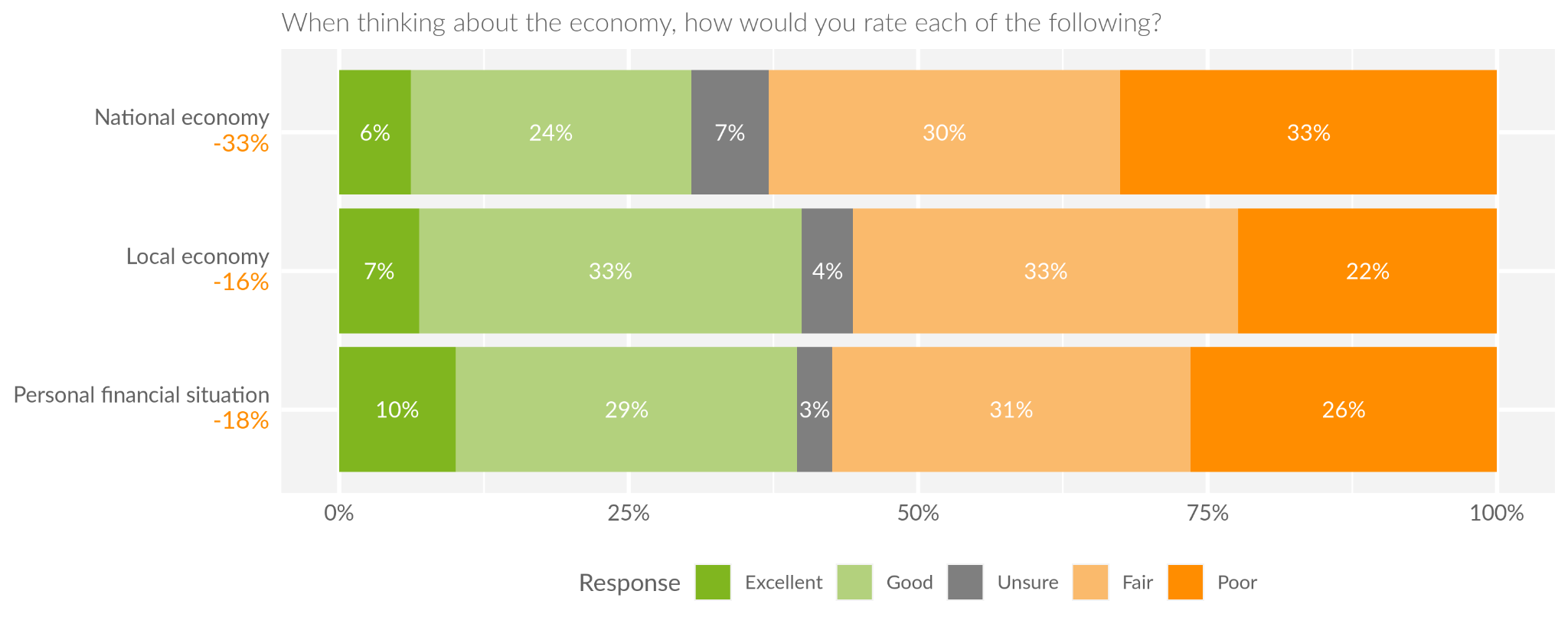
While the Trump administration has turned its focus towards a new international quagmire, voters are more concerned about what’s happening nationally and at home, where they view the broader economy poorly. The vast majority of voters expressed dissatisfaction with the economy at all levels, with 63% rating the national economy as “Fair” or “Poor”, along with 55% rating their local economy and 57% rating their personal financial situation in a similar fashion. Across all three levels of the economy, over twice as many voters rated the economy as “Poor” than rated it as “Excellent”.
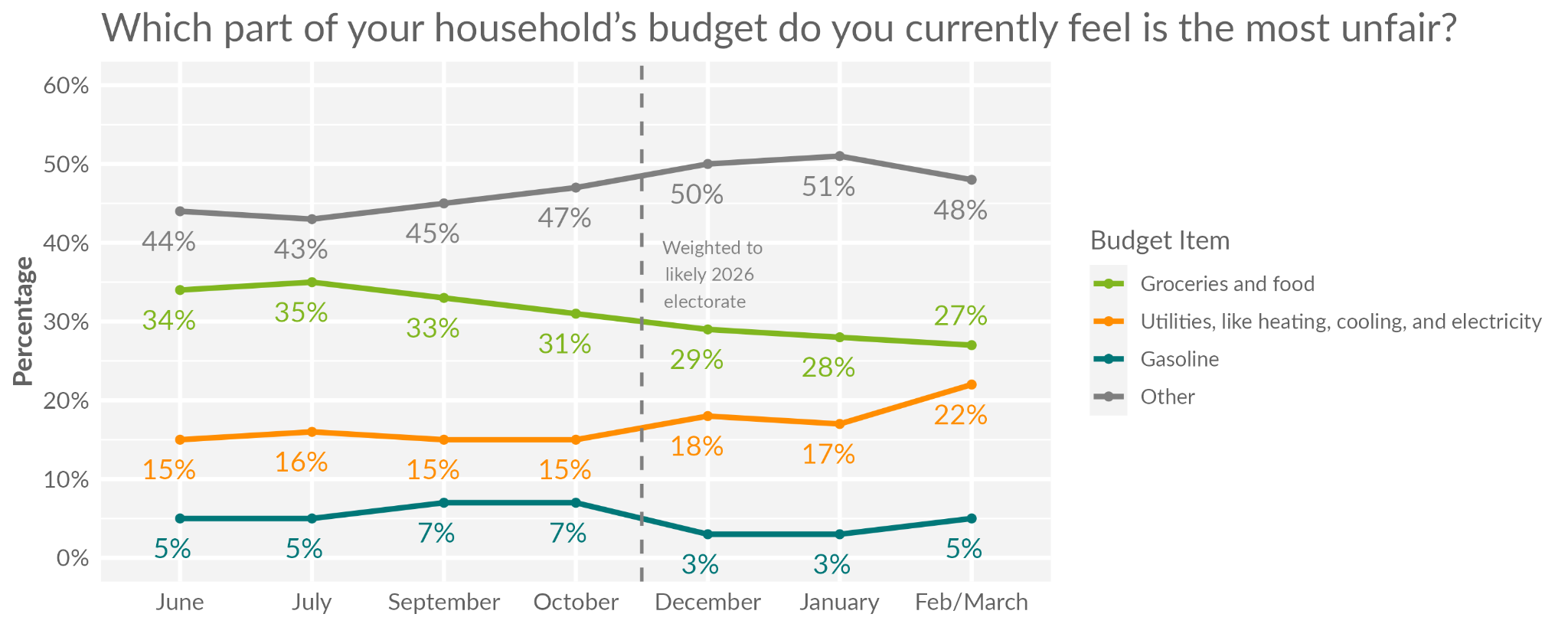
These numbers confirm that midterm voters are likely to be very sensitive to any unexpected increase in prices across their budget, which is a point to consider as we prepare for potential economic fallout from war with Iran. For the past several months of the Clarity Omnibus survey, we have been asking voters what component of their household budget they find the most unfair. After a bitterly cold January for much of the country, the share of voters identifying utility costs as the most unfair component of their budget has been trending upwards, hitting a high of 22% this month. The share of voters reporting gasoline costs as the most unfair, while starting to tick up, is quite low (5%).
Rising Costs are Now an Advantage for Democrats
Over the past several months of the Clarity Omnibus surveys, voters have consistently expressed disapproval of Trump’s handling of inflation and prices. This month, the president’s net approval on inflation and prices sits at -24%, his worst approval rating across all issue areas that were tested. President Trump’s unpopularity on this issue has provided Democrats a modest but notable trust advantage on issues related to affordability and prices. This month, we asked voters which party they trusted more to address a variety of affordability-related issues, and a plurality of voters trusted Democrats over Republicans across every issue tested. Democrats hold a trust advantage on lowering healthcare costs (+11%), lowering the cost of living (+9%), and making housing more affordable (+6%).
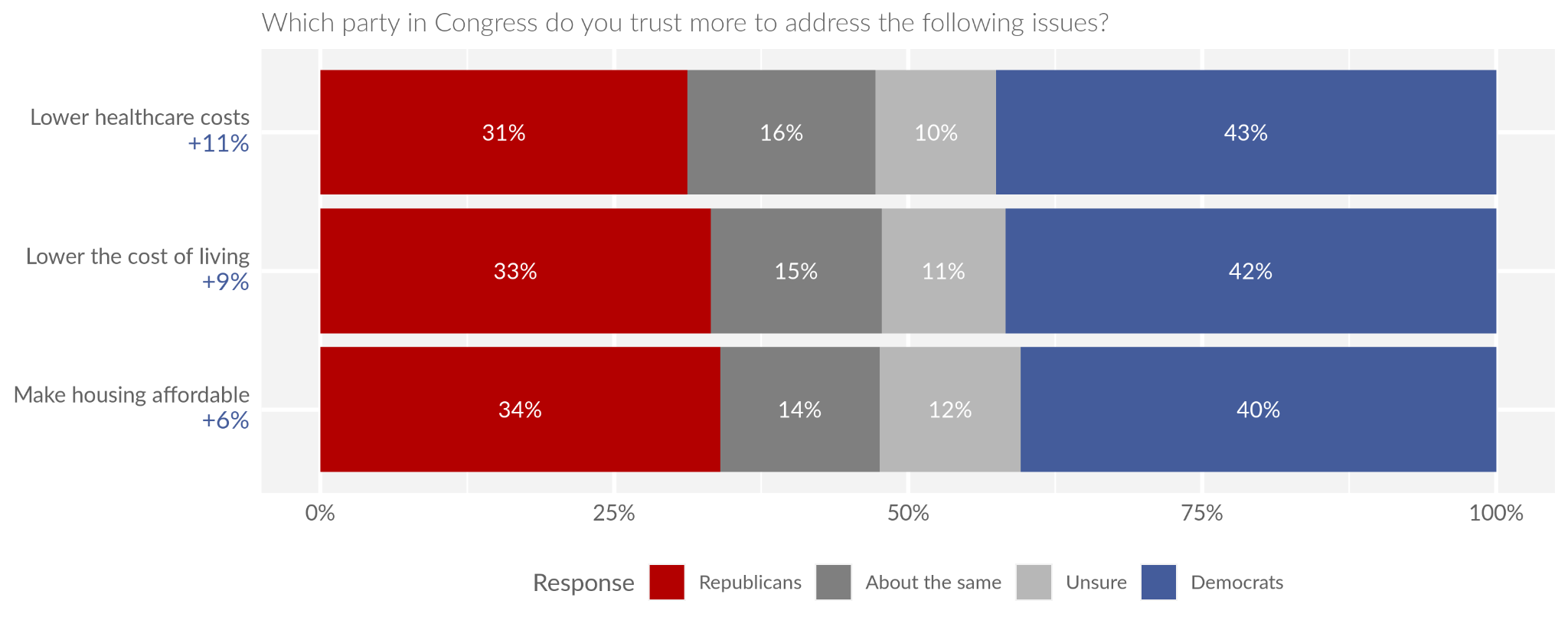
Voters are already feeling squeezed by rising utility costs, and the growing volatility in energy markets and disruptions to supply chains driven by the war in Iran could ratchet up the pressure. Republicans could be stuck defending an unpopular war, giving Democrats a chance to expand their trust advantage on affordability issues with likely midterm voters.
This national survey of 1,004 likely 2026 voters was fielded from February 26th-March 7th, 2026. You can dig deeper and share the public March 2026 Omnibus report here. Detailed toplines and crosstabs are also available to subscribers on our Polling Portal.